Rayonier seedlings
Rayonier grows more than 30 million seedlings every year in the rich soils of our Elberta, Alabama, tree nursery. We foster robust root systems and plentiful tops for each baby pine, setting them up for success when they're replanted in our forests across the U.S. South.

Tour the Rayonier seedling nursery
Take a video tour of the Rayonier seedling nursery as we go from planting the seeds to shipping fullgrown seedlings to our forests. Follow steps 1 through 11 in the diagram below:
Welcome to the Seedling Nursery! Today we're going to show you how we grow more than 30 million pine trees per-year in the rich soils of Rayonier's Elberta, Alabama, nursery.
Mimicking the cold winter weather that causes seeds to go dormant, our seed freezer is kept at 10° F. Seeds are rehydrated at planting time.
When we sow, or plant, the seeds for our container seedlings, they're sent through an assembly line that ensures each seed has what it needs to thrive.
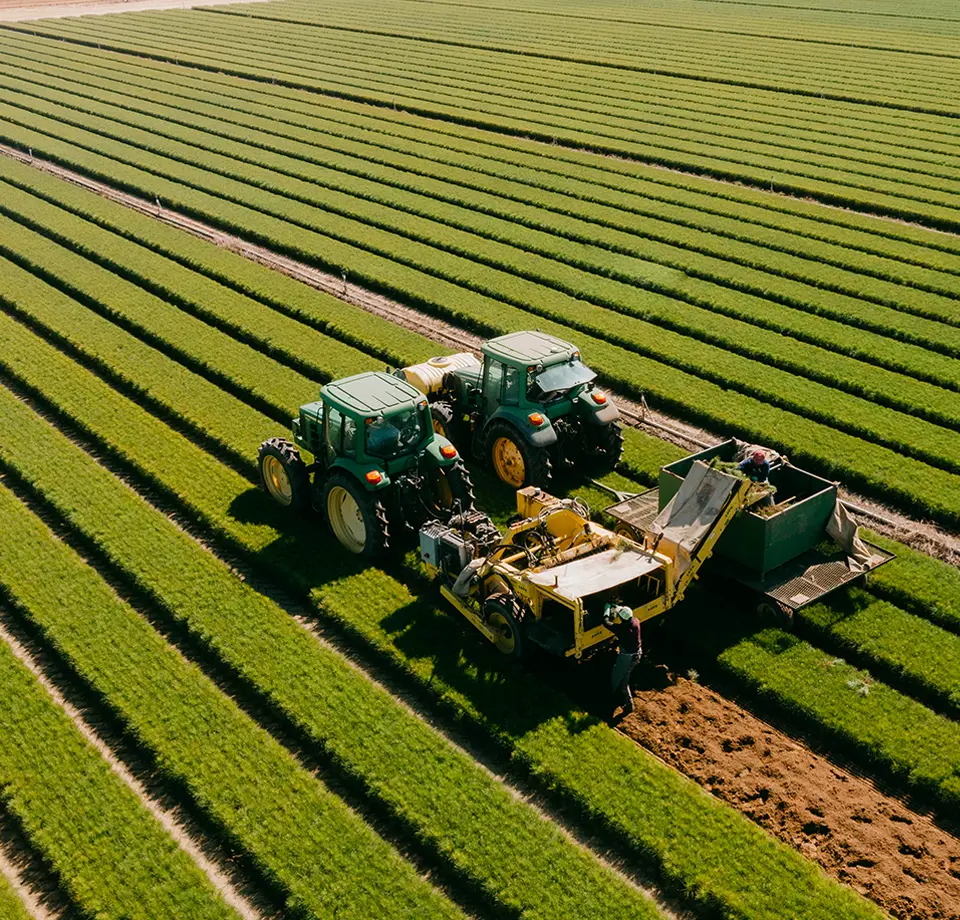
When it's time to plant our field seedlings, known here as our "bare root" crop, we work to make the soil as nutritious for the trees as possible.
When we plant our seeds in the field, we use a special vacuum system on our tractor to ensure each seed is planted in the right spot.
Once our seeds are in the ground, the work has just begun. Someone from our team is at the nursery every day to ensure the baby trees have what they need.
When we "lift," or harvest, our bare root seedlings, we have to work quickly to get them out of the hot sun and into moist, cool bags for shipment.
We quickly organize our baby seedlings and place them in bags, adding a slurry to keep them hydrated on their journey to the forests where they'll be planted.
Containerized seedlings are removed from their containers and placed in moist boxes. They are then placed in a freezer to await shipment to the forests for planting.
We send our seedlings out in refrigerated vans that keep them cool until they're replanted in our forests. Cool air keeps them dormant, which is less stressful for them. Ideally, they should be back in the ground within a few days.
Thank you for joining us on our virtual tour of the Rayonier seedling nursery! We hope this tour helps you look at forests in a whole new way.
Welcome to the Seedling Nursery! Today we're going to show you how we grow more than 30 million pine trees per-year in the rich soils of Rayonier's Elberta, Alabama, nursery.
Mimicking the cold winter weather that causes seeds to go dormant, our seed freezer is kept at 10° F. Seeds are rehydrated at planting time.
When we sow, or plant, the seeds for our container seedlings, they're sent through an assembly line that ensures each seed has what it needs to thrive.
When it's time to plant our field seedlings, known here as our "bare root" crop, we work to make the soil as nutritious for the trees as possible.
When we plant our seeds in the field, we use a special vacuum system on our tractor to ensure each seed is planted in the right spot.
Once our seeds are in the ground, the work has just begun. Someone from our team is at the nursery every day to ensure the baby trees have what they need.
When we "lift," or harvest, our bare root seedlings, we have to work quickly to get them out of the hot sun and into moist, cool bags for shipment.
We quickly organize our baby seedlings and place them in bags, adding a slurry to keep them hydrated on their journey to the forests where they'll be planted.
Containerized seedlings are removed from their containers and placed in moist boxes. They are then placed in a freezer to await shipment to the forests for planting.
We send our seedlings out in refrigerated vans that keep them cool until they're replanted in our forests. Cool air keeps them dormant, which is less stressful for them. Ideally, they should be back in the ground within a few days.
Thank you for joining us on our virtual tour of the Rayonier seedling nursery! We hope this tour helps you look at forests in a whole new way.

What makes Rayonier seedlings ideal for our forests:
The Rayonier Seedlings team produces seedlings designed to thrive in our forests across the U.S South. A healthy seedling should have robust roots, plentiful foliage and a large caliper, which is the diameter of the young trees' woody stems. We strive to replant our forests within a year of harvesting mature trees.
Our goal for each seedling is:
6-Inch Roots
10-Inch Foliage
5.5 MM Caliper
A history of sustainable planting
For more than 60 years, Rayonier has produced its own seedlings to ensure the sustainability of our forests for generations to come.
/1930s
Rayonier plants its first stand of trees in Nassau County, Florida. From now on, our approach to forestry will be as much about planting as it is about cutting. The nursery will later move to Glennville, Georgia, and then to Elberta, Alabama.
/1955
We open Morgan Nursery, our first seedling nursery, in Nassau County, Florida. Nextdoor to the nursery, we set out to improve our trees' growth and disease resistance, establishing one of the first seed orchards in the U.S. South.
/1957
Our East Coast Genetic Resource Center is established, a pioneer in tree improvement research and breeding techniques. This program continues to be a key component in Rayonier's forest management program today.
/2009
We plant our billionth tree. We continue to plant more than 30 million trees every year.